MEMENTO MORI · SERA NIMIS VITA EST CRASTINA VIVE HODIE · NON EST VIVERE SED VALERE VITA EST · HOMINEM PAGINA NOSTRA SAPIT · SVMMVM NEC METVAS DIEM NEC OPTES · HOC EST VIVERE BIS VITA POSSE PRIORE FRVI · MEMENTO MORI · QVOD SIS ESSE VELIS NIHILQVE MALIS · SPQR
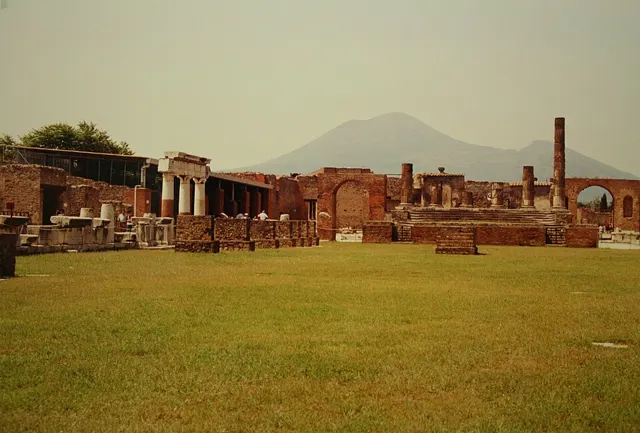
Pliny the Younger says that on the ninth day before the Kalends of September his uncle at Misenum saw a huge pine-shaped cloud rise from Vesuvius and sailed to help.
“Fortune,” he said, “favours the brave: head for Pomponianus.”
Background
Pliny the Elder, the great encyclopaedist, commanded the Roman fleet at Misenum on the Bay of Naples. Years later his nephew, Pliny the Younger, wrote to the historian Tacitus describing his death.
On the ninth day before the Kalends of September, about the seventh hour, the young Pliny's mother pointed out a cloud of unusual size and shape per Pliny. It rose from a mountain, later known to be Vesuvius, and looked most like a pine tree, with a tall trunk spreading into branches. The elder Pliny ordered a ship prepared. As he left the house, he received a note from Rectina, whose villa lay at the foot of the mountain and could only be escaped by sea. He turned the trip into a rescue, sailed straight toward the danger as ash and pumice fell on the ships, and when the helmsman advised turning back he said: "Fortune favours the brave; head for Pomponianus."
At Stabiae he calmed his friend, bathed, dined and slept. In the morning people tied pillows to their heads against falling stones and went down to the shore, where Pliny collapsed and died. When daylight returned, on the third day, his body was found intact, looking more asleep than dead.
⚠ Uncertain date
Ancient source: Pliny the Younger, Letters 6.16 · Reference
Ammianus describes how at dawn on 24 August a sudden darkness, storm and earthquake flattened Nicomedia, the mother city of Bithynia, and fire then consumed what was left.
Primo lucis exortu diem nonum kal. Septembrium concreti nubium globi nigrantium laetam paulo ante caeli speciem confuderunt
At first light on the ninth day before the Kalends of September, dense masses of black clouds darkened what had just before been a cheerful sky.
Background
Nicomedia, in north-western Asia Minor, had been Diocletian's imperial capital and was still one of the great cities of the eastern empire. Ammianus calls it "the mother of the cities of Bithynia" and promises to describe its ruin truly and briefly per Ammianus.
At first light on the ninth day before the Kalends of September, he writes, masses of black clouds suddenly covered a sky that had been bright, and it became so dark that people could not see what was right beside them. A violent storm broke, with the crash of waves heard far off, and then whirlwinds and a terrible shaking of the earth threw down the city and its suburbs. Because most houses stood on hillsides, they fell one on top of another, and the hills echoed with the cries of people searching for their wives, children and relatives.
After two or three hours the sky cleared and showed the destruction. Some were crushed, some were buried up to the neck and died for lack of help, others were pierced by beams. Then a fire broke out and raged for fifty days and nights, destroying most of what had survived per Ammianus. For people in Nicomedia, it was the sudden end of a great city.
Ancient source: Ammianus Marcellinus 17.7 · Reference
The Visigoths under Alaric entered Rome and plundered it, the first capture of the city by a foreign enemy in about eight hundred years. Orosius says they left of their own accord on the third day.
Tertia die barbari quam ingressi urbem fuerant sponte discedunt.
On the third day after they had entered the city, the barbarians left of their own accord.
Background
Alaric had blockaded Rome twice before, in 408 and 409, extracting ransoms and even setting up Attalus as a rival emperor to Honorius, who stayed safe behind the marshes of Ravenna. When negotiations broke down again in 410, the Goths entered the city.
The Christian historian Orosius, writing a few years later, stresses that the churches were respected: he tells how a Goth found sacred vessels of St Peter in the house of an old virgin, and how Alaric ordered them carried in procession to the apostle's basilica under armed escort, Romans and barbarians singing hymns together. On the third day, he writes, the barbarians left of their own accord, having burned some buildings, though, he says, far less than a great fire in the city's 700th year had done per Orosius.
The shock throughout the Roman world was enormous, and Augustine's City of God was written partly in answer to pagans who blamed the disaster on the abandonment of the old gods. The day comes from a single manuscript of Prosper's chronicle, which dates the capture to the ninth day before the Kalends of September disputed; it is the date generally given by modern historians.
⚠ Uncertain date: the day survives in only one manuscript of Prosper’s chronicle
Ancient source: Prosper of Aquitaine, Chronicle 1240 (a. 410); Orosius 7.39 · Reference
☁ Rome today (1991–2020 avg): 30°/20°C (86°/68°F) · rain 17% of days
Rome in AugustThe hottest weeks raised the risk of fire in the dense city, especially in…
Fields & crops
Columella marks autumn beginning around 12 August; straw and stubble were gathered, figs and early fruit picked, and vineyards readied for the vintage per Columella 11.2.
Courts & law
A quieter legal month; many elite Romans were in the countryside. Under the empire, the imperial household's slaves and freedmen kept administration running.
Senate & politics
Renamed from Sextilis in 8 BC for Augustus, who had won his greatest successes in this month, including the capture of Alexandria in 30 BC per Macrobius 1.12.35.
Military
Armies stayed in the field; disease in hot camps was often as dangerous as battle modern view based on ancient accounts.
Festivals & religion
Portunalia (17 Aug.), Vinalia Rustica (19 Aug.), Consualia (21 Aug.), Vulcanalia (23 Aug.), when small fish were offered to Vulcan to ward off fire, and Opiconsivia (25 Aug.) per Varro and Festus. On the Ides, Diana's day, enslaved people had a holiday per Festus and Plutarch.
Daily life
The hottest weeks raised the risk of fire in the dense city, especially in timber-framed insulae; Augustus set up the vigiles, a fire brigade of freedmen, in AD 6 per Suetonius and Dio. Fevers peaked in late summer and early autumn; the sick poor relied on home remedies and shrines more than on doctors modern view.