a.d. V Kal. Dec.
November 27 in Ancient Rome
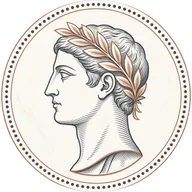
Death of Horace
death8 BC
Julian date · ≈ Nov 25 on our calendar
The poet Horace died at 56, soon after his patron Maecenas, and was buried near him on the Esquiline.
Horace
Background
Quintus Horatius Flaccus, the son of a freedman from Venusia, became one of Rome's greatest poets: author of the Satires, Epodes, Odes and Epistles, and of the Ars Poetica. After fighting on the losing side at Philippi in 42 BC, he was pardoned, worked as a treasury clerk, and was introduced by Virgil to Maecenas, Augustus' friend and cultural patron. Maecenas gave him a farm in the Sabine hills, which he celebrated in many poems.
Maecenas died in 8 BC. Horace died on 27 November of the same year, aged 56, after a sudden illness per Suetonius' Life of Horace. He was so ill he could not sign his will and named Augustus as his heir by word of mouth. He was buried on the Esquiline next to Maecenas' tomb.
Horace had once promised Maecenas in an ode that they would go together "when that day comes" (Odes 2.17), and the closeness of their deaths struck ancient readers. Augustus had earlier asked Horace to be his secretary; the poet declined, and Augustus took it without offence per Suetonius.
Approximate: leap years were misapplied in 45 BC–AD 8, so the exact day may shift by one or two days. Why?
Ancient source: Suetonius, Vita Horati ('decessit V Kal. Decembris') · Reference
Sources
Read moreSecond Triumvirate legally established
Second Triumvirate legally established
politics43 BC
Julian date · ≈ Nov 25 on our calendar
The Lex Titia formally gave Antony, Octavian and Lepidus five years of power, and the proscriptions followed.
Augustus · Mark Antony
Background
After Caesar's murder in 44 BC, his lieutenant Mark Antony and his young heir Octavian were at first rivals. In late October or November 43 BC they met with Lepidus on a river island near Bononia (Bologna) and agreed to share power. To give the deal legal form, the tribune Publius Titius passed a law, the Lex Titia, appointing the three "triumvirs for restoring the Republic" for five years. An inscribed calendar, the Fasti Colotiani, dates the start of their office to 27 November per the Fasti Colotiani; Appian and Dio describe the law but give no day.
Unlike the informal alliance of Caesar, Pompey and Crassus, this triumvirate had legal powers above the regular magistrates. Its first act was to publish proscription lists: names of men who could be killed by anyone, with rewards for killers, including enslaved people, who were promised freedom per Appian. Around 300 senators and 2,000 equestrians were listed per Appian; numbers vary between sources. Their property was confiscated to pay the armies. Cicero was among the victims.
The triumvirs defeated Caesar's assassins at Philippi in 42 BC. The arrangement was renewed in 37 and finally collapsed in the war between Octavian and Antony.
Approximate: leap years were misapplied in 45 BC–AD 8, so the exact day may shift by one or two days. Why?
Ancient source: Fasti Colotiani (a.d. V Kal. Dec.); Appian, Civil Wars 4.2–7; Cassius Dio 47.2 · Reference
Sources
☁ Rome today (1991–2020 avg): 14°/7°C (57°/45°F) · rain 37% of days
Rome in NovemberFor farmers, the weeks of ploughing and sowing were long and wet.
Fields & crops
Main sowing of wheat and beans; Columella marks winter's start around 10 November and advises finishing sowing by the Kalends of December per Columella 11.2.
Courts & law
The Plebeian Games (4–17 Nov.) closed courts on many days; legal business resumed in late November late Republic.
Senate & politics
Elections for the next year's magistrates were sometimes delayed into autumn in troubled years; Cicero's First Catilinarian was delivered in November 63 BC.
Military
Sailing largely stopped from around 11 November per Vegetius, a late source; armies moved into winter quarters.
Festivals & religion
Ludi Plebeii with the Epulum Iovis on the Ides; in late antiquity the Isia of Isis (28 Oct.–1 Nov.) and the start of the Brumalia (24 Nov.) per the Chronography of 354.
Daily life
For farmers, the weeks of ploughing and sowing were long and wet. In Rome, the Plebeian Games brought free shows, but a holiday meant no pay for day labourers. With sea traffic stopped, city grain prices depended on what had been stored before winter.
The poor lived in crowded apartment blocks (insulae), where upper floors had no water or heating and braziers caused fires; Juvenal mocks the risk of collapse and fire satire, Juvenal 3.
Sources: Columella 11.2 · Chronography of 354 · Juvenal, Satire 3
All days in November →
LATIN LINE OF THE DAY
Hoc est vivere bis, vita posse priore frui.
“To be able to enjoy one's past life is to live twice.”
Martial, Epigrams 10.23 · translation ours (literal)