MEMENTO MORI · SERA NIMIS VITA EST CRASTINA VIVE HODIE · NON EST VIVERE SED VALERE VITA EST · HOMINEM PAGINA NOSTRA SAPIT · SVMMVM NEC METVAS DIEM NEC OPTES · HOC EST VIVERE BIS VITA POSSE PRIORE FRVI · MEMENTO MORI · QVOD SIS ESSE VELIS NIHILQVE MALIS · SPQR
a. D. XV Kal. Sextiles· as written (pre-Julian calendar)
The Romans marked a. d. XV Kal. Sextiles as the Day of the Allia, anniversary of the defeat by the Gauls that led to the sack of Rome, and banned all business on it.
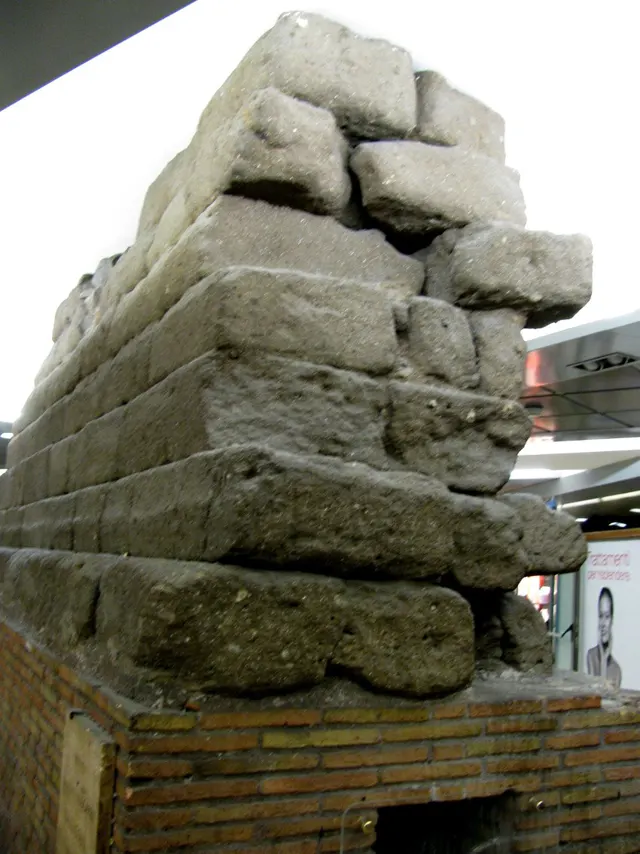
The "Servian" Wall at Termini, built after the Gallic sack that followed the Allia. Ursus, CC BY-SA 3.0
diemque a. D. XV Kal. Sextiles, duplici clade insignem, quo die ad Cremeram Fabii caesi, quo deinde ad Alliam cum exitio urbis foede pugnatum
And the fifteenth day before the Kalends of Sextilis, marked by a double disaster (the day the Fabii were slain at the Cremera, and later the shameful battle at the Allia with the city’s ruin)…
Background
In the early fourth century BC, Gallic warriors crossed the Apennines and marched on Rome. The Roman army met them at the little river Allia, a few miles north of the city, and was routed. Days later the Gauls entered and sacked Rome itself tradition. Plutarch says they entered a little after the Ides of Quintilis and held the city for seven months per Plutarch.
The disaster left a permanent mark on the Roman calendar. When the city was rebuilt, Livy says, the magistrates turned to the question of religious days. The day before the fifteenth day before the Kalends of August, "remarkable for a double disaster", the slaughter of the Fabii at the Cremera and the shameful battle at the Allia, they named the Day of the Allia and marked it for "transacting no business whether public or private" per Livy.
The memory lasted for centuries. In AD 69, Tacitus reports, people took it as a fatal omen that the emperor Vitellius issued an edict as chief priest on 18 July, the anniversary of the Cremera and the Allia. Tacitus says this showed his ignorance of all civil and religious precedent per Tacitus.
Before Caesar's reform (45 BC) the calendar had drifted from the seasons, so the real seasonal date was different; we don't give a modern equivalent. Why?
Ancient source: Livy 6.1.11; Tacitus, Histories 2.91 · Reference
☁ Rome today (1991–2020 avg): 31°/19°C (88°/66°F) · rain 14% of days
Rome in JulyWater was precious: Rome's aqueducts fed public fountains, from which most…
Fields & crops
Harvest finished in the uplands; threshing and storage, stubble burned or grazed, and the first ploughing of fallow per Columella 11.2. Cato advises that olive groves be hoed and vines tied in summer, and that the threshing floor be ready before grain is brought in per Cato, Agr. 2, 91.
Courts & law
Courts sat less during the Ludi Apollinares (6–13 July); much elite business paused as senators left the hot city late Republic.
Senate & politics
Renamed from Quintilis in 44 BC for Julius Caesar, born in this month. Republican consular elections were often held in July late Republic. Caesar was born on 12 or 13 July disputed: sources differ on the day; after his death the month was renamed in his honour by a law of Mark Antony in 44 BC per Macrobius 1.12.34.
Military
Peak campaign season. On 15 July the equites paraded through Rome (transvectio equitum), revived by Augustus per Suetonius, Aug. 38.
Festivals & religion
Ludi Apollinares (6–13 July), founded during the war with Hannibal; the Poplifugia (5 July); the Lucaria in sacred groves (19 and 21 July); Neptunalia (23 July) with leafy shelters against the heat per Varro and Festus.
Daily life
Water was precious: Rome's aqueducts fed public fountains, from which most people carried water up the stairs of their apartment blocks per Frontinus, De aquis. Food spoiled quickly; those without kitchens bought cooked food at taverns and street stalls. Graffiti at Pompeii record prices for bread, wine and oil, and rents for rooms per Pompeian inscriptions. Martial jokes that he lives up three tall flights of stairs, a common lot for renters satire, Martial 1.117. The well-off escaped to villas; the poor had no such option.