MEMENTO MORI · SERA NIMIS VITA EST CRASTINA VIVE HODIE · NON EST VIVERE SED VALERE VITA EST · HOMINEM PAGINA NOSTRA SAPIT · SVMMVM NEC METVAS DIEM NEC OPTES · HOC EST VIVERE BIS VITA POSSE PRIORE FRVI · MEMENTO MORI · QVOD SIS ESSE VELIS NIHILQVE MALIS · SPQR
a.d. quartum Idus Quintiles· as written (pre-Julian calendar)
Macrobius says the month Quintilis was renamed July because Julius Caesar was born in it, on the fourth day before the Ides, 12 July; Cassius Dio’s account has led some to argue for the 13th.
quod hoc mense a.d. quartum Idus Quintiles Iulius procreatus sit
because in this month, on the fourth day before the Ides of Quintilis, Julius was born.
Background
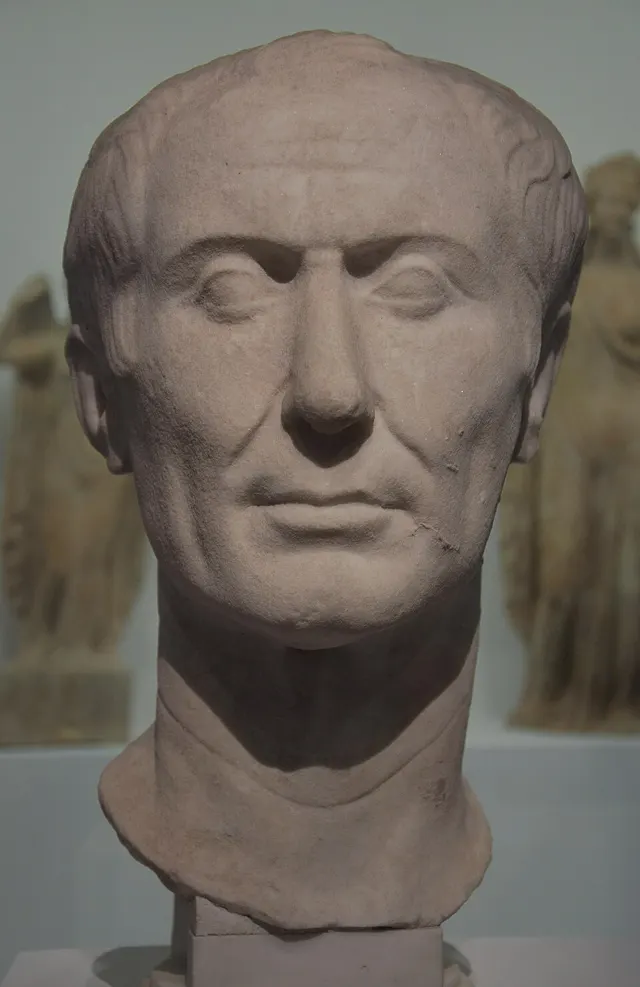
Gaius Julius Caesar was born into an old patrician family that claimed descent from the goddess Venus, though by his time the family was not especially powerful. He would become conqueror of Gaul, winner of a civil war and dictator, until his murder on the Ides of March 44 BC.
After his death, his birthday became a state festival. Cassius Dio says the triumvirs forced everyone to celebrate it by wearing laurel and making merry; anyone who neglected it would be cursed by Jupiter and by Caesar himself, and senators or their sons who failed would pay a million sesterces per Cassius Dio. Because the birthday fell on the same day as the Ludi Apollinares, and a Sibylline oracle forbade festivals to any other god on Apollo's day, they moved the feast to the previous day. Whether that means he was born on the 13th and celebrated on the 12th is still argued disputed.
Macrobius is clear: the month Quintilis was renamed Iulius, on a law of the consul Mark Antony, because Caesar was born in it on the fourth day before the Ides, 12 July per Macrobius. Centuries later, a Roman army calendar from Dura-Europos on the Euphrates still assigned an ox to the deified Julius on 12 July.
Before Caesar's reform (45 BC) the calendar had drifted from the seasons, so the real seasonal date was different; we don't give a modern equivalent. Why?
⚠ Uncertain date
Ancient source: Macrobius, Saturnalia 1.12.34; Cassius Dio 47.18.5–6; Feriale Duranum · Reference
☁ Rome today (1991–2020 avg): 30°/19°C (86°/66°F) · rain 13% of days
Rome in JulyWater was precious: Rome's aqueducts fed public fountains, from which most…
Fields & crops
Harvest finished in the uplands; threshing and storage, stubble burned or grazed, and the first ploughing of fallow per Columella 11.2. Cato advises that olive groves be hoed and vines tied in summer, and that the threshing floor be ready before grain is brought in per Cato, Agr. 2, 91.
Courts & law
Courts sat less during the Ludi Apollinares (6–13 July); much elite business paused as senators left the hot city late Republic.
Senate & politics
Renamed from Quintilis in 44 BC for Julius Caesar, born in this month. Republican consular elections were often held in July late Republic. Caesar was born on 12 or 13 July disputed: sources differ on the day; after his death the month was renamed in his honour by a law of Mark Antony in 44 BC per Macrobius 1.12.34.
Military
Peak campaign season. On 15 July the equites paraded through Rome (transvectio equitum), revived by Augustus per Suetonius, Aug. 38.
Festivals & religion
Ludi Apollinares (6–13 July), founded during the war with Hannibal; the Poplifugia (5 July); the Lucaria in sacred groves (19 and 21 July); Neptunalia (23 July) with leafy shelters against the heat per Varro and Festus.
Daily life
Water was precious: Rome's aqueducts fed public fountains, from which most people carried water up the stairs of their apartment blocks per Frontinus, De aquis. Food spoiled quickly; those without kitchens bought cooked food at taverns and street stalls. Graffiti at Pompeii record prices for bread, wine and oil, and rents for rooms per Pompeian inscriptions. Martial jokes that he lives up three tall flights of stairs, a common lot for renters satire, Martial 1.117. The well-off escaped to villas; the poor had no such option.